
Building a Seven-Figure Business With Freelancers

Webinar summary
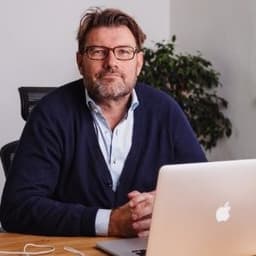
In this NachoTuesday webinar, Per from Codable, the largest WordPress-only online outsourcing marketplace, shares the company's journey and unique approach to connecting clients with top-tier, heavily vetted WordPress developers. Codable distinguishes itself by accepting only 3% of applicants through rigorous live coding tests and a community-driven code review process. Pær emphasizes their commitment to quality, a healthy working environment for developers, and a risk-free experience for clients with a money-back guarantee and a focus on clearly defined project scopes.
Key Talking Points:
- Stringent Vetting Process Ensures High-Quality WordPress Talent: Codable accepts only 3% of applying developers through live coding tests and peer code reviews, guaranteeing clients access to experienced and skilled WordPress experts.
- Emphasis on Clear Project Scoping and Fair Pricing: Codable facilitates detailed scope definition with input from multiple experts and provides an average price based on individual estimates, ensuring transparency and realistic expectations.
- Community-Driven Platform Fosters Collaboration and Knowledge Sharing: Codable has built a supportive environment where over 750 senior WordPress developers from diverse backgrounds collaborate, share skills, and collectively contribute to high-quality project outcomes.
Full video transcript
Andy Karuza (NachoNacho):
Very good. And then you guys probably focus a lot on helping your clients focus in on the minimal viable product, right? The MVP. So they might have this big vision of Facebook someday, but it might start with, let's start with the profile and allowing profiles to connect with each other.
Per Esbensen (Codeable):
Well, it really depends on the client. If most of our clients are businesses that is running and they need help optimizing or customizing the website, we also have clients that going to build from scratch. All agencies outsourcing to us and MVP thing is something that is super important when you are an upstart. We also started with an MVP back in the day. So the first year I was working double work, I was working in the agency and then I was to match my partner, I paid him with my own savings to work on an MVP while we were doing an analyzing of the market, figuring out is there a market fit for a player like quotable? And I started quotable when was 44 years old. So I'm not the typical UpStarter, I was not super green. I'm happy that I started when I was 44. I've been doing business before. It was also very exhausting when you have three kids and a wife and a Volvo and a villa.
Exactly. So while we also was analyzing the market, found out there's a market fit, we built NVP, we reached out to different interesting potential partners and also we were very active in the upstart stage in Denmark and in Slovenia where my partner was from. So once we actually had an MVP, there were quite a few investors knowing about our mission and vision. So it's all about getting everything planned and once you have everything planned, it's very much easier. And I also believe that diversity of people on the team, so too much, unfortunately we split a couple years ago, that's another story. It's like a marriage.
He is the one that is building everything. He's the creative, he's the developer. I don't code, I'm the businessman. And one-on-one is not two when you have so different skills. So he did what he did and I did what I did and together we became a whole lot more. So I think it's super important that you don't sit behind the screen and build. You need to get out of the office, you need to tell potential partners, potential investors, your idea, your vision, and then you get started. Then you have network of people, you can show results. And that's also how we started finding the right partner that could actually refer clients to us.
Andy Karuza (NachoNacho):
And you're very right though it is like a marriage and it's good to have different perspectives in the mix. The best teams are usually co-founders and team members that are very different, think differently than each other because they're able to bring different skill sets to the table, a different perspective and view and understanding of how to solve the problem better. Myself for instance, I've worked a lot with engineers, but I'm more of like a marketing focus. I'm thinking customer experience, focus, that sort of thing. Engineers are thinking in terms of architecture, tech, debt, all these other things. So if you have the right engineering mind as well paired with the right business people, you can really make magic happen. A lot of times what you might find sometimes is too much of the group thing happens with the same type of people hanging out together, two business people launching a company saying this is the way it should be. And the engineers say it's not possible
Per Esbensen (Codeable):
And they don't have a product and the engineers build the product, but they can't sell sand in Sahara.
Andy Karuza (NachoNacho):
Yeah, yeah, exactly. Yeah, totally true. Yeah, that's it. But yeah, together it's dangerous in a
Per Esbensen (Codeable):
Way. And it's also super important that looking back Tomas was a very different kind of person that I'm not normally working with. When I was in the agency business, it was like alpha males, you were actually hiding what you're not good at. But Tomas taught me about the web development world, how developers are thinking, and I've been working with developers very closely the last 12 years and I'm full of awe of developers. I hope one day developers will take over the world. I'm quite sure it'll be a better world because they're very good at sharing everybody that they fall in love with computers, they like the coding.
And then once they ask people on the web how to do A, B and C, and once they know they give back where businessmen, they're crew, it is only money and they don't help one another. So to much learn taught me that it's all about sharing and that we have was one of the key aspect of building quotable was to create not only a two-sided marketplace where we have clients and developers working on our platform.
It was also creating a healthy working environment academy where we can share and help one another because we have 750 plus experts. Imagine all the skillset sets combined what we're able to do. So we got skillsets every Friday where experts are educating other experts about what they're good at and we are helping each other out 24 7. It's not about you getting the work or me getting the work, it's about getting a scope properly defined. And if Andy is you have nailed it, then you should go with the client because we have a fair balance between numbers of experts and available projects, so it's better to help one another. And then we have a slack where everybody's on, if you could at marketing, Andy, can you help me with this? Of course you'll give back and then I can help you. And all of a sudden you have access to a whole lot more. And that means also better quality and better results and more happy clients. So the community is by far the what I'm most happy of what we have achieved.
Andy Karuza (NachoNacho):
Yeah, that's a great point. Any community really thrives on that. The give first mentality and without it, if everybody's just there to take, it doesn't work for anybody in that regard. And that's one thing I do respect about the developer community. A lot of 'em do collaborate with each other. Look at Stack Overflow for instance. People are always helping each other solve problems. They have this innate ability to want to solve problems. But I have seen a lot of business people that do have this give first approach and those tend to be the ones that are more successful.
But to your point, there is a lot more higher percentage of business people that are just out to get what's in their best interests. And those people usually are going for the short term results. But the ones I'm seeing, and especially there's been a shift over the last five to 10 years, I would say. I think more people are waking up to the idea of the give first mentality. And I do see a lot more of those business people becoming more successful because they're able to build a community, they're able to get a following and actually because people know they're actually looking out for their best interests. And so people want to be a part of that if you're building a company.
Per Esbensen (Codeable):
Absolutely. And that should not only be a mentality in the company, but kind of the mindset of everyone. We are point where we should all help one another. It is a difficult world out there. So it's super important that you keep to your core values and the DNA and make sure that people are thriving. So we are helping out as good as we can. Also, if people have personal cries problems, we help out. We always trust and believe in our experts and we all make mistakes. And if you embrace mistakes as we did when we built Codeable, but also when you communicate with your developers or your staff, did you learn something from this mistake? And when two adults can say, Hey, I made a mistake, but I learned from it, then you trust me even more before I did the mistake. And we did so many mistakes building quotable, and actually it shaped out a bit differently than we thought, but that's how the world goes.
But we were very good at embracing mistakes, doing retrospective, why did we make mistakes? What did we learn more importantly, what did we learn? And building an MVP is super interesting because it doesn't have to be so fancy, it doesn't have to have too many features. It's all about deploying and figuring out and then test and ask and talk with customers. What do they like, what they don't like? Because you can easily become true product minded that you can't before you have everything, but then maybe you are drowning in the only thing you're good at, right? It's actually just matchmaking skills. It doesn't have to be that super complicated.
Andy Karuza (NachoNacho):
And that's why it's good to start small. That's why the MVP approach, it's kind of a buzzword, but it is actually meaningful, right? Because you focus on solving the problem as simply as possible, helping the customer, and then you can layer on and add more features and do all that great stuff after. A lot of times it's hard if you overbuild and overcomplicate it and then you bring it to market, assuming what the customer wants, but you haven't done a good enough job really getting the customer feedback, really aligning the product to best solve their needs, the people paying you at the end of the day. And if they're not excited to hand you money to fix that problem, then you haven't done a good enough job with your business model.
Per Esbensen (Codeable):
And since we were always we're working with developers, we also, when we did our first version, we got help from the early adapters being completely transparent about this is the ux, this is what we're going to see, this is the product roadmap. And people have great input and ideas and then we shaped it. But one of the best lessons I learned myself is making sure that you also make a profit fairly fast. So quality comes at a price and it's no shame building a company that is profitable because if it's not profitable, then we can't evolve and do all the good things that we need to do. So have that in mind when you launch a product. In our case, we make our money based on the fees our clients, where our customers are paying. And we had the fee structure low in the beginning, but after a year I raised the percentage. I remember I couldn't sleep the entire weekend. And when I did, I only think we had one client complaining. And as my accountant said, well, we should have done that a whole lot earlier. And there are always some that are complaining, but that's how it is. It's more important that you build that. You don't have to have X thousand of users before you have a breakeven because that is too difficult in my opinion.
Andy Karuza (NachoNacho):
Yeah, it's better to figure out, work out the kinks with a smaller audience, listen to if you really understand your customer and who you're actually trying to help, listen to those people. And if a lot of 'em are saying There's a problem, we're giving you the same feedback, it's probably good to implement it. But to your point as well, don't be chasing every piece of feedback. Some customers might have some erroneous feature that just they want, but not everybody else does. But by listening to your customers and collaborating with them, especially at the early stage, you can really start to formulate how you can best design your product and service to really benefit these people. And they'll willingly give you the feedback in many cases too. And if you hear the same thing over and over again, that's the time to listen.
Per Esbensen (Codeable):
Yeah. And interesting, when we started the big data wasn't wasn't something we were thinking about. We got data informed five years ago back in the days we were building based on my gut feeling, what do I think we need? And just talking with clients now, we have a lot of data where we can actually, so taking the next decision should in theory be easier, not just asking customers or users, but also having data and then your gut feeling. So it's one third of each, so therefore it should be a whole lot easier. But also there's so much data out there, you can also drown in data. So there's a fine line and what to do.
Andy Karuza (NachoNacho):
You have to be very strategic about it too. So knowing what data you want to collect, what you're actually going to do with it, then be able to read through the data and find anything that's valuable. You don't want to necessarily just collect data for the sake of collecting data. It could
Per Esbensen (Codeable):
Just really absolutely results as I see it. And I've been trying to tell that to other startups in my country when people are asking me. So for me, it's not rocket science. It's simply very, very easy and don't make it too advanced. It is about having a great product, a great product where you put in good old values. Like a word is a word. A deadline is a deadline. I'm on it and I mean I'm on it. I'll go through fire and water for you and that kind of product where you are so super proud of building something that works and then delivering result day out day in will also have an impact that people are talking nicely about you. We have today, we are highly recommended within the WordPress bubble. We're getting a lot of our clients referred from the WordPress companies out there, but we also had 50% before covid, I believe it was 35% of all our clients came from word of mouth.
Andy Karuza (NachoNacho):
Wow, that's a huge number.
Per Esbensen (Codeable):
And then obviously you come to a certain point where you need to do more marketing, but in the beginning it was just word of mouth and clients referred from. And that's again basically because you have a product that works. So it's not that complicated. I know it sounds a bit stupid, but having a good product, whether it's online or offline, that's what makes a difference.
Andy Karuza (NachoNacho):
Usually it's the simplest things in life that most people forget and overlook. It's so simple. I'm going to try to overcomplicate this thing actually. And people think that especially with startups building products, let's just throw more money at it or advertise more. But to your point, it all comes back down to the product and making sure it's great. And if the product sells itself, then you're going to get natural word of mouth. And when you do actually go through those marketing efforts, the product will sell itself.
Per Esbensen (Codeable):
And then you have a base that you can work on and case studies, and then you can also find out with marketing direction you should use because that has become very complicated. So it's kind of interesting. And that's also one of the things that looking back, a lot of startups have been throwing a lot of money into paid advertising and it's getting absolutely amazingly difficult to gain from that. So going back to, you also had a question about books. So do you have
Andy Karuza (NachoNacho):
Any recommendations further?
Per Esbensen (Codeable):
Yeah, I never really did any. When I started my business, I went on Amazon and I bought a whole lot of different upstart books because what do I know? I'm just a humble guy from Denmark trying to build an online outsourcing platform with my buddy that I met on from different country. The first year I didn't know he had legs because we were Skyping.
Andy Karuza (NachoNacho):
I worked with an engineer in Germany, I launched a company with him, actually an IOT company. And I never met the guy until after the company. Isn't
Per Esbensen (Codeable):
It fantastic? Isn't it fantastic that it actually doable? And when I talk about that people, it can't be true. And we have created an eight figure million dollar company with no office. Everything is in the cloud, very proud of having more than, is it 50 or 60 different countries where our experts are from. It doesn't really matter where you're from, as long as you can code. So anyway, back to the book. The only book I remember that was it's called, let me take my notes
Andy Karuza (NachoNacho):
And we could post it on the LinkedIn page after too. Yeah,
Per Esbensen (Codeable):
It's The Lean Startup by Eric Rice. Oh,
Andy Karuza (NachoNacho):
That one's classic.
Per Esbensen (Codeable):
Yeah, I only came to page two because
Andy Karuza (NachoNacho):
Did he get download that app on
Per Esbensen (Codeable):
Page two? It said get out of the office.
Andy Karuza (NachoNacho):
Oh wow.
Per Esbensen (Codeable):
I love that.
Andy Karuza (NachoNacho):
And here you are and me too.
Per Esbensen (Codeable):
Yeah, because you need to reach out as you do. You need to find audience for your podcast. We need to find clients for our platform, we need to talk with a whole lot of different people and they are out there. So sitting behind the screen doesn't really move, but you need to have people that does the MVP and the product and engineering and all that.
Andy Karuza (NachoNacho):
Yeah, and I think one of the points too is that do things that don't scale and meaning for that is to talk to your customers, really spend time fine tuning the business model and actually understanding what your customers want before you go throw a bunch of money at advertising.
Per Esbensen (Codeable):
Yeah, for sure. The first up to Corona, we haven't done a lot marketing now. It's something that we need to do because scaling and keep on growing needs more and more. And we are one of the, we are very well kept secret, so we need to tell more people about what we do because we can definitely help you getting Exactly.
Andy Karuza (NachoNacho):
Awesome. And what's next for Cobo? What are you guys excited about that you're working on over there?
Per Esbensen (Codeable):
Well, I mean, so we are a bootstrapping company. Always been. We had an early investor that we bought out and we've been creating everything ourselves and been growing nicely year on year for many years. And now I want to make a small date in the universe. I believe there's a need for a place, codeable, I believe website is here to stay. And people need help with the WordPress or websites in general to make money. And I envision that credible will be the hub of talent where we have a healthy working environment with a whole lot of experts educating one another, working together more. Because in the freelancing world, there's a tendency that experts are working in silo in their respective silos with that irrespective clients. But if you're good at marketing and I'm good at SEO, you should talk with Andy and you should talk with Pierre because now build your website.
You need SEO, I can refer one of my best colleagues on codeable. He's very good at this and this and that. And then we kind of become a fulfillment center of everything, WordPress, and there's so much more we can do on educating and helping our developers. And there are so many amazing interesting companies out there that should spend less time on development and having bad experiences with mediocre developers, deadlines not being or hold budgets, going in the wrong direction, getting frustrated. And that takes a lot of energy and a lot of defocus where they should focus on the business and then outsource the work that they don't want to do or can't do to a reliable person. So that's next step. We're going to tell the world a bit more who we are.
Andy Karuza (NachoNacho):
I like it. Yeah, so time is money as they say. So rather than learn the hard way, they should come to a web platform like you guys to be able to find the developers. They could bring their vision to production from highly vetted developers instead of learning the hard way. Fortunately and Pair, we're very excited to be working with you guys and hopefully to be a great part of your guys' growth story as well. We do really appreciate the partnership that we have with codeable. Look forward to growing both of our companies together and highly recommend your product. You guys have been great to work with. Definitely sign up, good leadership over there.
Read the rest of the transcript →Hide the rest of the transcript ←
Your team's been fantastic. Definitely recommend Codeable to everybody that's listening to this webinar today and you can pick it up today in Nacho Nacho's, B2B SaaS marketplace. It's the best place to buy SaaS. We have great products and platform partners like Pair here, and we look forward to continuing to grow together.
Per Esbensen (Codeable):
Thank you. Likewise.
Andy Karuza (NachoNacho):
Take care.
Discussed in this episode

Codeable is the only WordPress freelancer platform. We match customers to the best WordPress experts.
Related NachoTuesday interviews


NachoTuesday: C-Suite Insights
Exclusive live 1:1 interviews with SaaS executives, investors, media, and founders.

Learn tips, growth hacks, and strategies from industry leaders

Hear behind-the-scenes stories you won’t get anywhere else

Engage live with our guests on LinkedIn Live, every Tuesday